

Nigeria’s youth population is one of the largest in the world, yet the spaces where national decisions are made often remain out of reach for them. Today, many youth leaders are pushing for the intentional inclusion of young people in policy processes that directly affect their lives. As a result, more young Nigerians want to understand how policy works, how to influence governance systems, and how to advocate for the issues they care about. However, access to practical, high-quality policy education remains limited.
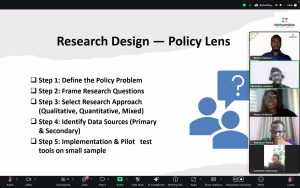
To bridge this gap, the Network of Youth for Sustainable Initiative (NGYouthSDGs) launched the Youth Policy Lab Pilot, a three-hour virtual learning experience designed to introduce young Nigerians to the fundamentals of policy research, design, and advocacy. Nineteen young participants, representing all six geopolitical zones, joined the session.
The session combined governance simulations, stakeholder mapping, and policy communication drills. Instead of long lectures, participants negotiated trade-offs, identified key influencers, drafted policy ideas, and pitched solutions to real issues. Each participant also developed a short policy brief after the session and these drafts were later fine-tuned with the support of one of the experts guiding the Lab. The goal was simple: show that policy learning can be practical, youth-led, and engaging.
The results were striking. Confidence in explaining the policy cycle rose from 42 percent before the session to 89 percent afterwards. Understanding of stakeholder mapping increased from 5 per cent to 67 per cent. All participants found the session useful, and most expressed interest in joining the longer 12-week Youth Policy Lab programme.
Beyond the numbers, the reflections were powerful. One participant shared:
“One key thing I learned is the importance of evidence-based advocacy using data, policy frameworks, and measurable outcomes to strengthen the case for inclusion.”
Another added:
“The session emphasized that policy communication must depend on who your audience is — academics, activists, or decision-makers. That clarity matters.”
These insights show what happens when young people are trusted with tools and responsibility.
The pilot also validated the Youth Policy Lab as a scalable model for youth policy education. With over 200 applicants for only a few slots, it is clear that the demand is high. The session served as a technical rehearsal for the full 12-week programme, helping refine templates, facilitation flow, digital tools, and assessment frameworks. Materials have now been archived for replication, and the relationships formed between participants and facilitators mark the early beginnings of a national youth policy learning network.
Of course, the pilot also revealed areas for improvement. Time constraints limited deeper engagement with more complex modules, and minor network disruptions affected participation for a few attendees. Participants recommended longer sessions, more hands-on exercises, expanded breakout discussions, and scheduled times that better accommodate busy young professionals.
These recommendations now shape the next phase: transforming this pilot into a structured 12-week programme that offers deeper policy research training, advocacy strategy development, communication frameworks, and leadership tools. The vision is not just to run a course, it is to democratise policy education and build a generation of young Nigerians equipped to analyse, influence, and lead within systems that shape their future.
The Youth Policy Lab Pilot proved one thing: when young people are equipped with knowledge and platforms, they don’t just participate, they lead. And Nigeria is better for it.
